How Accurate Is Counting Calories From a Photo?
Photo calorie estimates miss most on oil, sauces and portion size. A short note with the photo adds what the camera cannot see, in the same step as logging.
 Greg, Cal Clark team6 min read
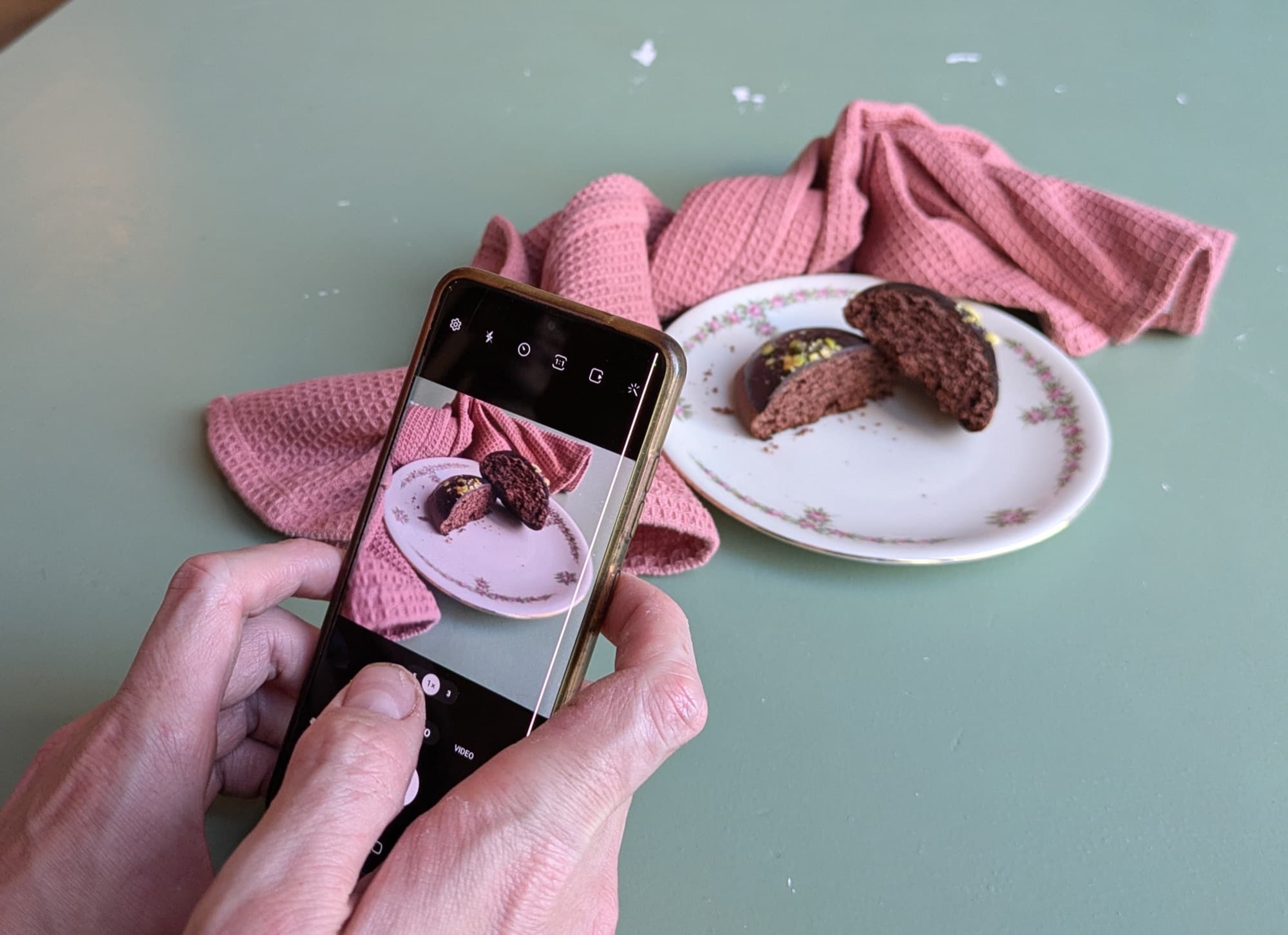
A photo gives a useful estimate of a meal's calories, but not an exact one. A 2023 systematic review of 52 studies found average calorie errors from under 1% to about 38% for image-based estimates, with the smallest errors on simple, single foods. A camera misses most on what it cannot see well, such as cooking oil, sauces and how deep a bowl of rice goes. A short note about the oil and the portion fills that gap.
Key takeaways
- Photo estimates work best on simple plates where each food is visible.
- They tend to undercount fat, mostly oil, butter and creamy sauces.
- Add the oil and sauces you used. A note with the photo ("fried in olive oil", "half the rice") does it in the same step as logging.
- In studies, automated photo estimates were about as accurate as people estimating by eye.
What the research says
Most research on food photos compares a computer estimate with a "ground truth": food that was weighed, or calculated from nutrition tables. The systematic review in Annals of Medicine pulled together 52 such studies published between 2010 and 2023. Average calorie errors ranged from 0.10% to 38.3%, and the range was lower when an image showed single or simple foods. The authors concluded that automated estimates line up with, and may beat, the accuracy of people estimating by eye. More of the research we use is on our science page.
A newer test looked at four popular apps. Researchers at the US National Institute of Diabetes and Digestive and Kidney Diseases photographed 102 meals that had been weighed to the nearest 0.1 g in a research kitchen, and ran them through the apps. According to the American Society for Nutrition's summary, every app estimated about 250 to 345 kcal too low per meal on average, and about 30 g too little fat. This is early work, shown at a conference in July 2026 and not yet published in a journal. The researchers advise people who use a photo app without adjusting portions to treat the number with caution.
Why photos miss fat most often
Fat has more calories per gram than protein or carbohydrate, and it hides well. Oil soaks into vegetables and rice. Butter melts into sauces, and cream disappears into a soup. One tablespoon of olive oil is about 13.5 g and about 120 kcal. If a tray of roasted vegetables took two tablespoons, the photo would show golden vegetables, not the 240 kcal of oil inside them.
A camera also cannot see how deep the food goes. It sees the top of a bowl of pasta, not how far down it reaches, and a heaped plate of rice can hold more than it looks.
Photos compared with other ways to log
| Method | What it gets right | Where it goes wrong |
|---|---|---|
| Writing it down from memory | No app needed | Easy to forget items; in one small NEJM study of people with obesity who said they could not lose weight, intake was under-reported by 47% on average |
| Photo estimate, unchanged | Fast, no memory needed | Oil, sauces, portion depth |
| Photo estimate, then adjusted | Fixes the known gaps | A second step after the estimate |
| Photo plus a note, in one step | Oil, sauces and portion go in as you log | Only as good as your guess of the oil and portion |
| Weighing every ingredient | Closest to the real number | Slow; hard to keep up at restaurants |
| Barcode scan | The numbers printed on the label | Only for packaged food, and only if you eat the whole pack or weigh your portion |
Use a kitchen scale for the few foods that carry most of the calories.
Add what only you know, in the same step as the photo
You can add what the camera missed in two ways. One is to fix the number after the estimate, by changing grams or adding an ingredient. The other is to tell the app before it estimates, so the meal is logged in one go. In the 2026 test, the apps' photo estimates undercounted fat by about 30 g per meal, and fat is often the part you know about, because you poured the oil or chose the sauce.
Cal Clark asks one question before it works out the numbers: "Anything the photo can't show?" You add a short note, such as "fried in 2 tablespoons of olive oil", "garlic mayo dip" or "half the rice". Cal Clark reads your note and the photo together, and your note leads the estimate.
What to put in the note:
- Cooking fat: how much oil or butter went into the pan.
- Sauces and dips: what they are made of, and roughly how much.
- Portion: "half the plate", "a second helping", "only the filling".
- Homemade food: the main ingredients of a dish no photo can read, like a stew or a filled dumpling.
You can still change the grams or add an ingredient after logging, and saved meals keep their numbers for next time.
How to get a closer estimate from a photo
- Shoot the whole plate from above or at a slight angle, in good light, before you start eating.
- Keep foods apart where you can. Rice next to the curry is easier to judge than rice under it.
- Say how much oil and butter you used. Count the spoonfuls when you cook, and put them in the note or log them as an ingredient.
- Check the portion of the main starch. Rice, pasta, potatoes and bread swing the total most. Weigh them a few times until 150 g looks familiar.
- Log sauces and dressings separately. Mayonnaise, pesto and creamy dressings are small on the plate and large in calories.
- Save the meals you eat often. Correct a regular breakfast once and reuse it. If you track protein, the saved meal keeps that number steady too.
When a photo is not enough
If you follow a diet set by a doctor or dietitian, for example for diabetes or kidney disease, weigh food the way your care team asks. Do the same when you prepare for a competition or a medical test.
For everyday weight loss or muscle gain, your weight over several weeks tells you more than any one meal. Logging most days, with the portions corrected, shows that trend.
Frequently asked questions
Do photo calorie estimates overestimate or underestimate?
The 2026 test of four popular apps found underestimates on average, especially for fat. If your weight is not moving on what looks like the right calorie target, check the oil and sauces first.
Is a photo more accurate than writing down what I ate?
A photo does not rely on memory, so a forgotten side dish is less likely. Neither method knows how much oil went into the pan unless you add it.
Can a photo tell how many calories are in a drink?
Not reliably. A latte with whole milk and one with skimmed milk and a pump of syrup look the same. Log drinks by name and size instead.
Sources
- Shonkoff E, Cara KC, et al. AI-based digital image dietary assessment methods compared to humans and ground truth: a systematic review. Annals of Medicine, 2023.
- American Society for Nutrition. Photo-based calorie tracking apps may underestimate energy in meals. NUTRITION 2026 conference abstract, July 2026.
- Lichtman SW, Pisarska K, et al. Discrepancy between self-reported and actual caloric intake and exercise in obese subjects. N Engl J Med, 1992.
- USDA FoodData Central. Oil, olive, salad or cooking.
This article is general information, not medical advice. Talk to a doctor or a registered dietitian before you make big changes to your diet.
Log your meals with a photo.
Cal Clark shows calories and macros in seconds. Join the waitlist and we'll tell you when the app goes live.
3-day free trial. No ads.